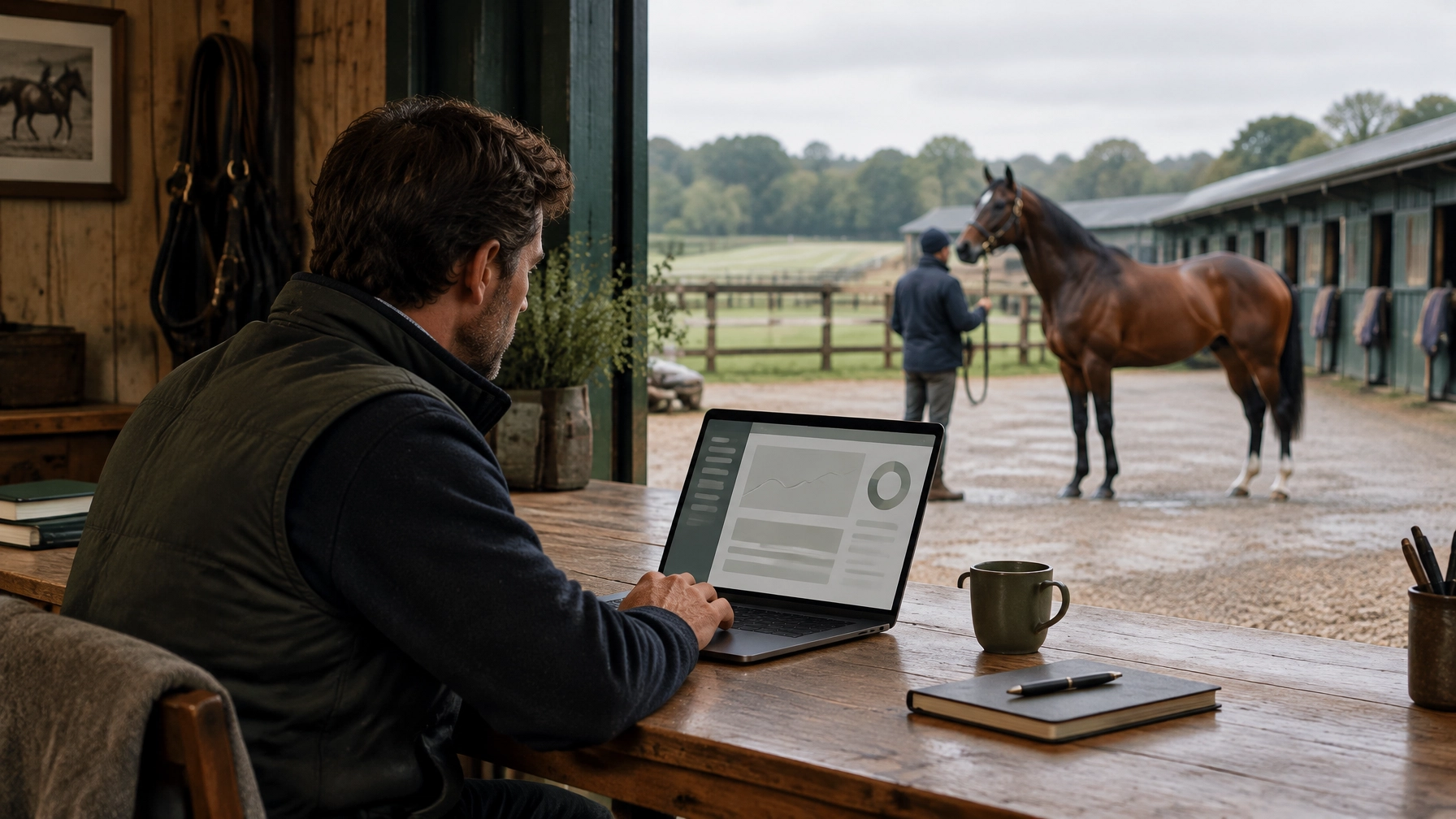
The short answer is no. Equine SEO services are not dead.
However, SEO has changed. Ranking for a few keywords on Google is no longer the entire objective. Owners, syndicate members and equestrian customers now use traditional search, Google’s AI features, map listings, social media and AI assistants to research businesses.
Your objective is therefore broader:
- Appear when people search for your services.
- Provide information that Google and AI systems can understand.
- Build enough authority to be considered trustworthy.
- Convert visitors into enquiries, calls, bookings or ownership conversations.
For racehorse trainers and equestrian businesses, this is now part of a wider horse racing digital marketing strategy.
Why Google still matters in 2026
AI search assistants are growing, but they have not replaced Google Search. Google remains a key starting point for high-intent searches such as:
- “Racehorse trainer in Yorkshire”
- “Point-to-point trainer near Lambourn”
- “Horse livery yard in Gloucestershire”
- “Thoroughbred breaking and pre-training”
- “Stud farm near Newmarket”
- “Competition yard with indoor school”
Google’s own guidance confirms that AI Overviews and AI Mode still use relevant web pages and links to support their answers. Google also states that the same foundational SEO practices apply to these AI features.
That means your website still needs to be:
- Crawlable and indexable.
- Fast and mobile-friendly.
- Clearly structured.
- Relevant to the services you provide.
- Supported by accurate business information.
- Written for people rather than search engines alone.
AI has changed how results are presented. It has not removed the need for a reliable website.
Read Google’s guidance on AI features and your website for the technical requirements.
What has changed about equine SEO?
Traditional SEO focused heavily on individual rankings. A business might target phrases such as “racehorse trainer” or “horse livery yard” and measure success by its position in the results.
Those rankings still matter, but modern equine SEO must account for more than ten blue links.
Your business may now be discovered through:
- Standard organic search results.
- Google AI Overviews and AI Mode.
- Google Maps and Business Profile listings.
- “Near me” searches.
- Voice searches.
- AI assistants such as ChatGPT, Gemini, Perplexity and Copilot.
- Social media recommendations.
- Links from racing, bloodstock and equestrian organisations.
- Reviews and third-party mentions.
The important shift is from ranking for a keyword to becoming a credible answer to a real customer question.
For example, an owner may not search only for “racehorse trainer in Wiltshire”. They may ask an AI assistant:
“Which racehorse trainers near Wiltshire offer regular owner communication, syndicate opportunities and experience with National Hunt horses?”
A well-optimised business needs content covering those specific points. It also needs consistent information across its website, Google Business Profile, social channels and relevant industry listings.
What does modern equine SEO actually involve?
1. A clear website structure
Your website should make your services obvious to visitors and search engines.
Avoid placing every service on one vague homepage. Create dedicated pages for important areas such as:
- Racehorse training.
- Pre-training and breaking.
- Point-to-point training.
- Syndicate ownership.
- Horses in training.
- Breeding and stud services.
- Livery.
- Competition yard facilities.
- Training packages or yard visits.
Each page should explain:
- What you provide.
- Who the service is for.
- Where you operate.
- What the process involves.
- What makes your operation different.
- How the visitor should contact you.
Use specific page titles and headings. For example:
- Weak: Welcome to Our Yard
- Stronger: National Hunt Racehorse Training in Gloucestershire
This is a straightforward improvement covered in our guide to improving equestrian SEO.
2. Local SEO and Google Business Profile management
Most equestrian businesses operate within a defined geographical area. Local SEO is therefore essential.
Google says local rankings are mainly influenced by relevance, distance and prominence. Complete business information helps Google understand the operation and match it to suitable searches.
Review the following areas:
- Business name and category.
- Address or service area.
- Telephone number.
- Website link.
- Opening hours or contact availability.
- Services.
- Yard and facility photographs.
- Regular updates.
- Customer reviews and responses.
If your yard is private and does not receive customers at the premises, use an appropriate service-area setup rather than displaying an inaccurate public address.
Do not add locations simply to target towns where you do not operate. This creates poor user experiences and can damage trust.
Read Google’s guidance on improving local ranking before making changes to your profile.
3. Helpful, expert content
AI systems need clear information to summarise. They are more likely to use content that answers a specific question directly and demonstrates genuine expertise.
For a racehorse trainer, useful content could include:
- How owners are updated during a horse’s training programme.
- What is included in a syndicate share.
- How you assess a horse before purchase.
- How horses progress from breaking to race preparation.
- What facilities are available at the yard.
- How often owners can visit.
- How you manage welfare, fitness and recovery.
- What experience the team brings to the operation.
For a stud farm, relevant content might cover:
- Foaling and mare care.
- Covering arrangements.
- Youngstock preparation.
- Pedigree and breeding planning.
- Veterinary support.
- Sales preparation.
Answer the questions prospective customers actually ask. Keep paragraphs short. Use descriptive headings and avoid filling pages with generic keyword variations.
4. Structured data and consistent business information
Structured data helps search engines interpret a page. It can identify information such as:
- Business name.
- Location.
- Contact details.
- Opening hours.
- Services.
- Reviews, where applicable.
- Organisation details.
Structured data does not guarantee a ranking or AI recommendation. It is also not a substitute for useful content. It simply provides an additional, standardised way to explain the page.
Google recommends that structured data matches the visible content on the page. It should not be used to mark up information that visitors cannot see.
Read the official guidance on LocalBusiness structured data.
5. Reviews, authority and third-party references
An AI assistant cannot assess your yard by looking at a single homepage alone. It may compare information from multiple sources.
Build a consistent online presence through:
- Detailed Google reviews.
- Links from recognised racing organisations.
- Bloodstock and equestrian directories.
- Local business listings.
- Partnerships with vets, farriers and equestrian suppliers.
- Mentions in relevant publications.
- Active social media profiles.
- Accurate race results and horse information.
Ask clients for honest reviews. Encourage them to describe the service received, but do not provide scripted or misleading wording.
For trainers, reviews may refer to communication, professionalism, owner experience and the quality of the yard. For livery or competition businesses, they may refer to facilities, care and customer service.
Does social media replace SEO?
No. Social media and SEO support different parts of the decision-making process.
Social media is useful for:
- Showing daily yard activity.
- Publishing race results.
- Sharing video updates.
- Promoting available ownership opportunities.
- Building familiarity with your team.
- Demonstrating an active operation.
Your website remains the central place for structured information, ownership details, service pages and enquiries.
A post on social media may create interest. A well-built website should answer the next questions and provide a clear action.
Include direct calls to action such as:
- Enquire about ownership
- Book a yard visit
- View horses in training
- Request livery details
- Contact the training team
Our guide to building a strong social media plan for an equestrian business explains how these channels can work together.
How should trainers measure SEO in 2026?
Do not measure success only by ranking position.
Track:
- Website enquiries.
- Telephone calls.
- Ownership brochure downloads.
- Yard visit requests.
- Contact form submissions.
- Clicks from Google Business Profile.
- Branded and non-branded search impressions.
- Search Console queries.
- Organic traffic to service pages.
- Engagement with ownership and contact pages.
A number-one ranking that produces no enquiries is less valuable than a lower position that attracts the right owner.
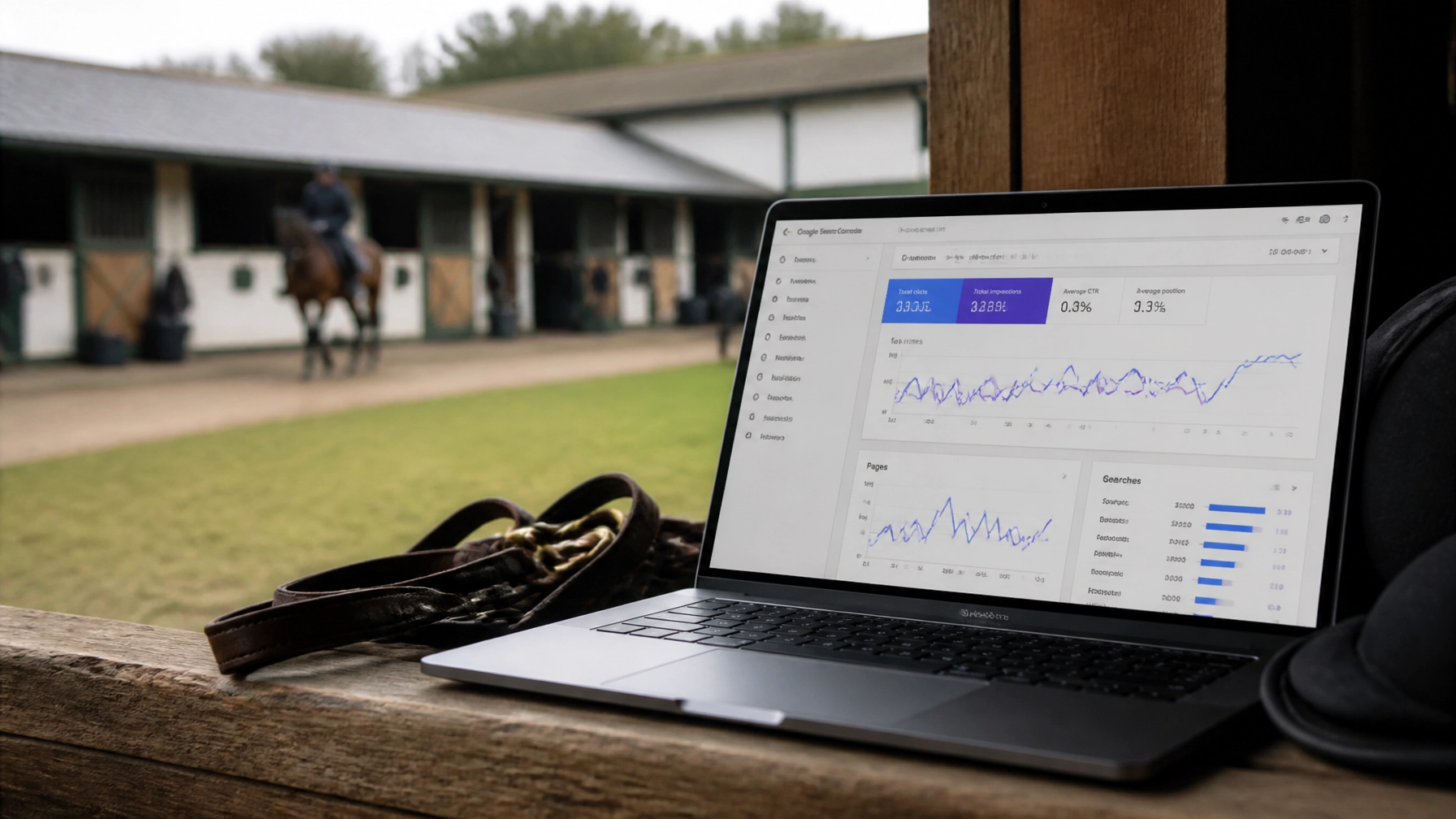
Set up Google Search Console and review your website performance regularly. Use the data to improve pages, headings, calls to action and content.
What should an equine SEO service include?
A practical equine SEO service should cover more than inserting keywords into existing pages.
Ask whether the service includes:
- Website and technical audit.
- Keyword and search-intent research.
- Local SEO review.
- Google Business Profile support.
- Service page planning.
- On-page copy and metadata.
- Internal linking.
- Mobile performance checks.
- Image compression and descriptive alt text.
- Structured data review.
- Review and reputation guidance.
- Search Console monitoring.
- Monthly reporting.
- Ongoing content recommendations.
SEO should also connect with your wider marketing. Professional photography, yard video, email marketing and social media all provide material that can strengthen your website.
First Lot Media’s website, photography and video packages include mobile-first website development and SEO-optimised structure. The Essential Launch Package starts from £3,995 plus travel, while the Signature Launch Package starts from £4,950 plus travel. Additional marketing and content services are available as add-ons.
SEO management pricing depends on the size of the website, the number of locations and the level of ongoing content required. Request a review before committing to a programme.
The practical answer: keep ranking on Google
Equine SEO services are not dead. Outdated, keyword-only SEO is becoming less useful.
Racehorse trainers and equestrian businesses still need to rank on Google because Google remains a major source of discovery, local information and trust. At the same time, your website must be clear enough for AI-powered search systems to understand and reference.
Start with these actions:
- Check whether your homepage clearly states your service and location.
- Create dedicated pages for your main services.
- Update your Google Business Profile.
- Add current, professional photographs and videos.
- Publish answers to real owner and customer questions.
- Request genuine reviews from satisfied clients.
- Improve mobile speed and contact pathways.
- Measure enquiries, not rankings alone.
- Review your search performance every month.
- Book a professional audit if you are unsure where to begin.
Your digital presence should make the right people confident enough to contact you. That is the purpose of modern equine SEO and effective horse racing digital marketing.
Request a free yard marketing review from First Lot Media to identify the practical improvements your website, photography and local search presence need.