A new website can improve your equestrian business. It can also become an expensive distraction if the real problem is unclear messaging, outdated photography, weak search visibility or a poor enquiry process.
The honest answer is this: you do not always need a completely new website. You need a website that loads quickly, explains what you offer, builds trust and makes the next step obvious.
That may require a full rebuild. It may only require a structured refresh, better content or one focused landing page.
This guide explains how to decide.
Start with the business problem
Before discussing colours, layouts or platforms, review what your current website is failing to do.
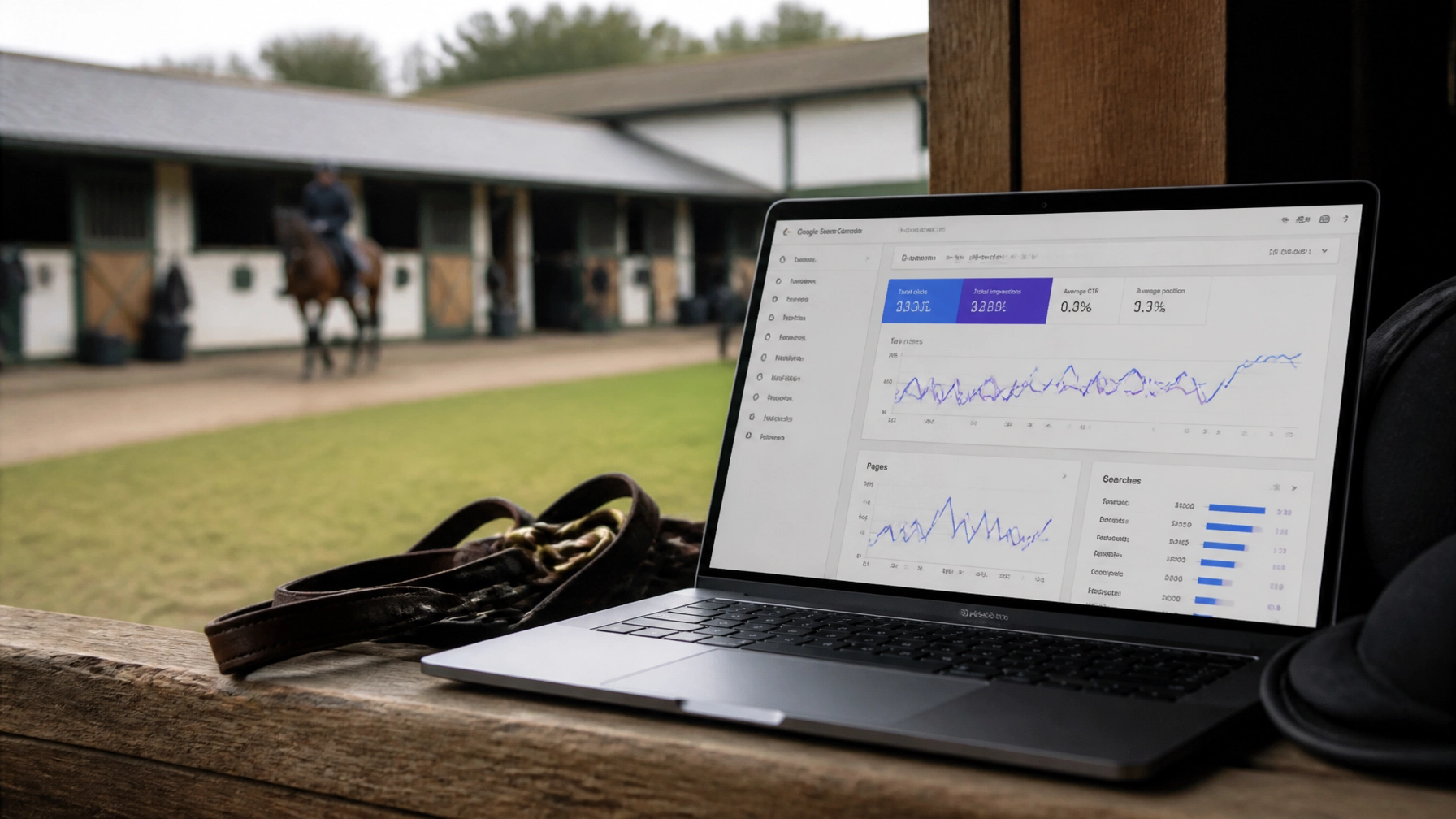
Look at the last 30 to 90 days of data and record:
- Website enquiries.
- Telephone clicks.
- Contact-form submissions.
- Booking or viewing requests.
- Directions clicks.
- Traffic from Google.
- Traffic from social media.
- The pages visitors view before contacting you.
Then ask customers how they found you. This will show whether your website is generating useful enquiries or simply receiving passive traffic.
For a racehorse trainer, the website may need to support ownership enquiries, syndicate interest and yard visits. A livery yard may need to promote vacancies and explain daily care. A competition yard may need to sell training, coaching and facilities. A stud may need to generate breeding and bloodstock enquiries.
The objective is not to have a modern website for its own sake. The objective is to make it easier for the right people to choose your business.
Signs your website is costing you enquiries
A redesign is worth serious consideration if one or more of these problems apply.
1. It performs badly on mobile
Horse owners often research from a phone while travelling, attending a competition or standing at the yard.
Warning signs include:
- Text is too small to read.
- Buttons are difficult to tap.
- Images extend beyond the screen.
- Menus are difficult to use.
- Videos load slowly.
- Contact details are hidden.
- Forms are frustrating on a phone.
Google’s Core Web Vitals guidance provides useful performance targets. A practical website should also be tested on a real mid-range phone using a normal mobile connection, not just on a fast office computer.
2. Visitors cannot tell what you offer
A homepage that says “Welcome to our yard” does not provide enough information.
Visitors should quickly understand:
- What type of business you operate.
- Where you are based.
- Who your service is for.
- What makes your operation suitable.
- What they should do next.
Use specific headings such as:
- Racehorse training in Gloucestershire.
- Competition livery and coaching in Yorkshire.
- Full and part livery near Newmarket.
- Thoroughbred breeding and youngstock services.
Specific language helps customers and supports equestrian SEO.
3. There is no clear call to action
Every important page should guide the visitor towards a relevant action.
Examples include:
- Enquire about ownership.
- Book a yard visit.
- Request livery details.
- Check current availability.
- Contact the training team.
- Ask about stallion bookings.
- Arrange a facility viewing.
Place the main call to action in the mobile header, near relevant information and at the end of the page. Keep enquiry forms short. Name, contact details, service required and a brief message are usually enough.
4. The content is out of date
Old photographs, expired vacancies, last season’s news and broken links make an active business appear neglected.
Review your website for:
- Old availability information.
- Outdated staff profiles.
- Previous yard locations.
- Incorrect opening hours.
- Discontinued services.
- Poor-quality or anonymous stock photography.
- Missing recent results or achievements.
A website is only useful if someone can keep it accurate.
5. You cannot update it easily
If every small change requires a developer, important information may remain unchanged for weeks.
Ask whether you can update:
- News and results.
- Horse profiles.
- Livery availability.
- Events and clinics.
- Team information.
- Prices or starting prices.
- Photography and video.
- Contact details.
A good content management system should give your team control without requiring technical knowledge for routine updates.
When a full rebuild is not necessary
A full rebuild may be unnecessary if your current website is secure, mobile-friendly, editable and generating enquiries.
Consider a smaller project when:
- The structure is broadly correct.
- The branding still reflects your business.
- The site loads quickly.
- Your domain has useful search visibility.
- The main issue is weak copy or outdated media.
- You need one new service or location page.
- You want to test a new offer before changing the entire site.
A focused landing page may be enough for:
- A new livery service.
- A syndicate opportunity.
- A seasonal breeding service.
- A competition clinic.
- A new facility or training programme.
- A specific local service area.
Improve the existing homepage, add a strong call to action, replace poor imagery and create the missing page. Measure the results before commissioning a larger project.
Do not replace a site simply because a competitor has a different colour palette.
What a good equestrian website build should include
Effective equestrian web design must reflect how customers assess a yard. They want evidence of standards, facilities, experience, care and communication.
A professional build should include:
Clear service pages
Avoid placing every service on one generic page. Create useful pages for:
- Racehorse training.
- Point-to-point training.
- Pre-training and breaking.
- Competition livery.
- Full and part livery.
- Coaching and lessons.
- Stud and breeding services.
- Events and facility hire.
- Ownership or syndicate opportunities.
Each page should explain who the service is for, what is included, where you operate and how to enquire.
Trust-building information
Include:
- The team and their experience.
- Your training or care philosophy.
- Facilities and daily routines.
- Results, testimonials or case studies.
- Current photography.
- Relevant qualifications or professional memberships.
- Clear information about visits, prices or availability.
For racehorse trainers, owners may also want information about communication, ownership options, stable visits and horses in training. These are covered in more detail in our guide to building a racehorse trainer website that owners trust.
Technical foundations
Your supplier should include:
- Responsive mobile design.
- Fast-loading images.
- Secure hosting and SSL.
- Analytics and conversion tracking.
- Google Search Console setup.
- Search-friendly page titles and headings.
- Descriptive image alt text.
- XML sitemap and indexing checks.
- Redirects for changed URLs.
- Backups and software updates.
- Basic accessibility testing.
Use Google’s SEO Starter Guide as a useful reference. Avoid suppliers who promise rankings without explaining the work involved.
How much should you budget in 2026?
Website costs vary according to the number of pages, content requirements, integrations and supplier expertise. Treat these as planning ranges, not fixed tariffs.
- DIY website: Approximately £10 to £50 per month, excluding your time, photography and content.
- Small professional brochure site: Approximately £1,500 to £3,000.
- Specialist multi-page website: Approximately £3,000 to £8,000.
- Complex equestrian centre, stud or booking platform: Approximately £8,000 to £20,000 or more.
Functionality affects the price. Online bookings, availability systems, memberships, horse directories, email marketing integrations and payment processing require additional planning and development.
First Lot Media’s current launch packages start from £3,995 plus travel for the Essential Launch Package and £4,950 plus travel for the Signature Launch Package. These packages combine professional website development with photography and video content. Review the First Lot Media packages for the current scope.
Request a line-item proposal covering:
- Discovery and planning.
- Sitemap and page count.
- Copywriting or copy editing.
- Photography and video.
- Hosting and domain costs.
- Content management system.
- Analytics and tracking.
- SEO foundations.
- Redirects and migration.
- Training.
- Ongoing support.
- VAT and recurring fees.
Keep ownership of your domain, hosting, analytics and Google Search Console accounts.
How the website connects to SEO, video and social media
A website should not operate separately from the rest of your marketing.
SEO
Practical equine SEO services should improve your visibility for relevant searches, such as:
- Racehorse trainer near a specific location.
- Horse livery with an indoor school.
- Competition yard offering coaching.
- Stud farm and breeding services.
- Point-to-point training.
Create useful pages for genuine services and locations. Do not create thin pages for places where you do not operate.
Video and photography
Professional photography shows the facilities, horses, staff and standards that written copy cannot fully communicate.
Video can support:
- A homepage introduction.
- A yard tour.
- A trainer interview.
- A facilities overview.
- A social media reel.
- An owner or client testimonial.
- A breeding or youngstock explanation.
Keep video fast, captioned and supported by written information. It should improve understanding, not delay the page loading.
Social media
Social media creates interest. Your website should answer the next questions.
A post about available livery should link to livery details. A race result should link to the relevant trainer or horse page. A video of a facility should direct visitors to booking or enquiry information.
An equestrian social media agency can help plan this activity. For racing businesses, it should form part of a wider horse racing digital marketing strategy.
The practical decision
Keep your existing website if it is secure, mobile-friendly, easy to update and producing enquiries.
Refresh it if the foundation is sound but the content, imagery, calls to action or search structure are weak.
Build a new website if the platform prevents improvement, the mobile experience is poor, key services are missing, your business has changed substantially or the site is actively losing trust and enquiries.
Do not start with a visual redesign. Start with the customer journey.
Review the problems. Fix the highest-value barriers. Track the result. Then decide whether a full rebuild is justified.
If you are unsure, book a free website and marketing review with First Lot Media. We will review your website, Google presence, social media, content and enquiry journey, then identify the practical improvements worth prioritising.
No pressure. No requirement to replace a website that is already doing its job. Just clear advice before you invest.